
'%3e%3cpath%20d='M31.96%2042.4211V31.2583H35.3337L35.8398%2026.9067H31.96V24.1288C31.96%2022.8693%2032.2738%2022.011%2033.9025%2022.011L35.9764%2022.01V18.1178C35.6177%2018.066%2034.3866%2017.9474%2032.9537%2017.9474C29.9616%2017.9474%2027.9132%2019.975%2027.9132%2023.6978V26.9067H24.5293V31.2583H27.9132V42.4211H31.96Z'%20fill='white'/%3e%3c/g%3e%3cdefs%3e%3cclipPath%20id='clip0_820_4965'%3e%3crect%20width='22.8941'%20height='24.4737'%20fill='white'%20transform='translate(19.6235%2017.9474)'/%3e%3c/clipPath%3e%3c/defs%3e%3c/svg%3e)
'%3e%3cpath%20d='M36.9363%2019.0706H25.6868C22.0255%2019.0706%2019.0469%2022.0424%2019.0469%2025.6954V36.9196C19.0469%2040.5724%2022.0255%2043.5442%2025.6868%2043.5442H36.9365C40.5976%2043.5442%2043.5762%2040.5724%2043.5762%2036.9196V25.6954C43.5762%2022.0424%2040.5976%2019.0706%2036.9363%2019.0706ZM31.3116%2037.9992C27.6132%2037.9992%2024.6045%2034.9973%2024.6045%2031.3074C24.6045%2027.6174%2027.6132%2024.6156%2031.3116%2024.6156C35.0099%2024.6156%2038.0186%2027.6174%2038.0186%2031.3074C38.0186%2034.9973%2035.0099%2037.9992%2031.3116%2037.9992ZM38.179%2026.1937C37.0861%2026.1937%2036.1972%2025.3068%2036.1972%2024.2163C36.1972%2023.1259%2037.0861%2022.2388%2038.179%2022.2388C39.272%2022.2388%2040.161%2023.1259%2040.161%2024.2163C40.161%2025.3067%2039.2719%2026.1937%2038.179%2026.1937Z'%20fill='white'/%3e%3cpath%20d='M37.8527%2023.9653C37.402%2023.9653%2037.0352%2024.3315%2037.0352%2024.7811C37.0352%2025.2308%2037.402%2025.5969%2037.8527%2025.5969C38.3036%2025.5969%2038.6704%2025.2311%2038.6704%2024.7811C38.6704%2024.3312%2038.3036%2023.9653%2037.8527%2023.9653Z'%20fill='white'/%3e%3cpath%20d='M27.2234%2031.3073C27.2234%2029.0581%2029.0575%2027.2284%2031.3116%2027.2284C33.5659%2027.2284%2035.3999%2029.0581%2035.3999%2031.3073C35.3999%2033.5564%2033.5659%2035.3863%2031.3116%2035.3863C29.0575%2035.3863%2027.2234%2033.5564%2027.2234%2031.3073Z'%20fill='white'/%3e%3c/g%3e%3cdefs%3e%3cclipPath%20id='clip0_820_4970'%3e%3crect%20width='24.5294'%20height='24.4737'%20fill='white'%20transform='translate(19.0469%2019.0706)'/%3e%3c/clipPath%3e%3c/defs%3e%3c/svg%3e)


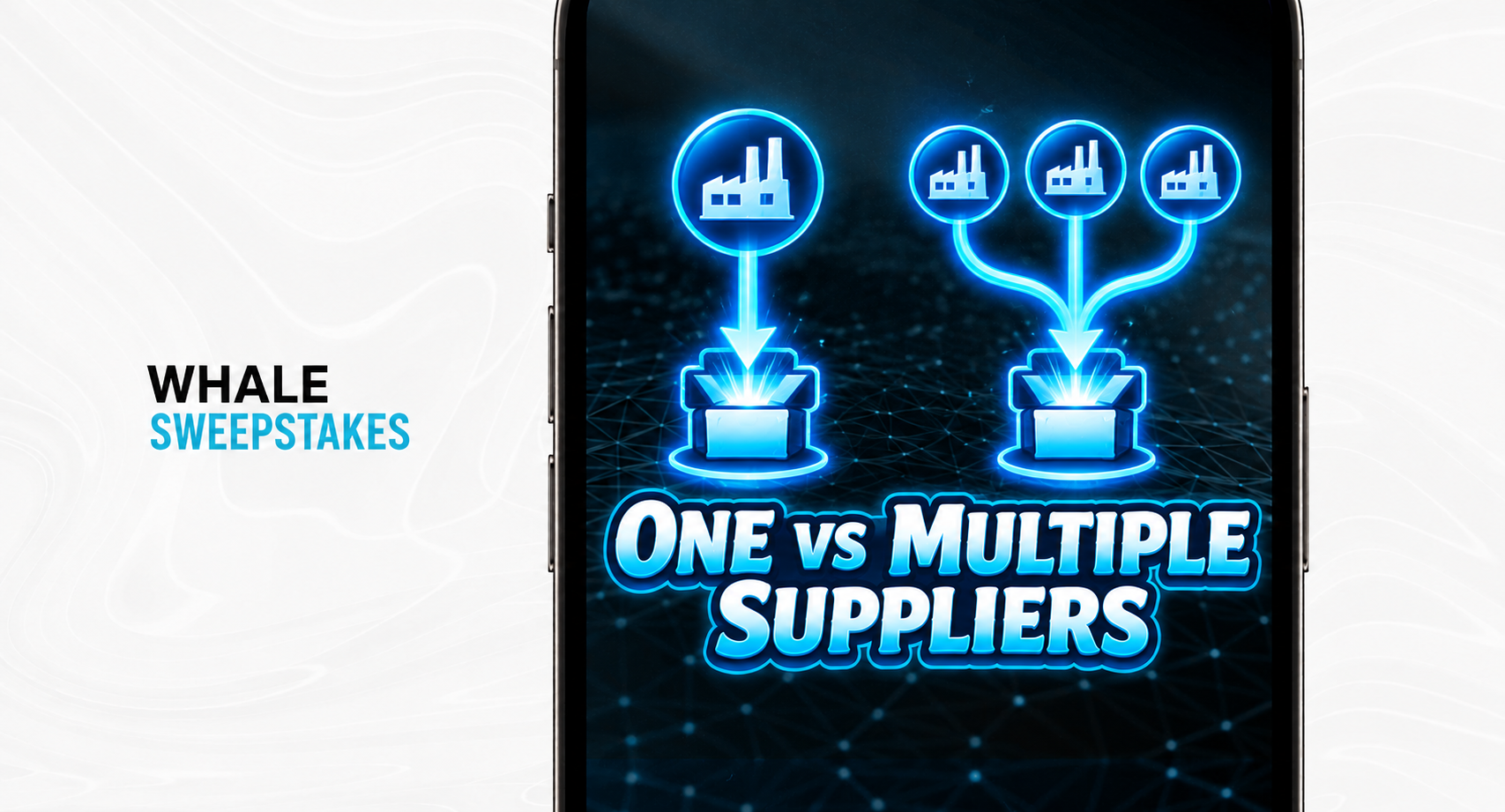
One Gaming Distributor vs. Multiple Suppliers: Operational Trade-Offs
The choice between one gaming distributor vs. multiple suppliers affects more than the number of contacts in an operator’s phone. It changes how the business handles purchasing, documents, support requests, and unresolved problems. Consolidation can simplify some tasks while creating dependencies that deserve their own review.
Start with the supplier workload the business actually experiences. A decision based on missed invoices or confusing escalation paths is more useful than an assumption that one company must always be easier to manage.
Map the Current Supplier Workload
List each platform, the company supplying it, the account used, and the person responsible for purchasing. Add payment terms, support channels, and where invoices or transaction records are stored. This creates a practical picture of the current arrangement.
Record recurring problems separately from preferences. Perhaps staff contact the wrong provider, a payment lacks a platform reference, or a technical issue remains between two companies. Identify which problems consolidation could realistically address.
Also note what works. A specialist supplier may provide access to a system or configuration another provider does not offer. Reducing the number of relationships is not useful if it removes something the operation requires without a workable replacement.
Test the Value of a Single Contact
A single supplier may coordinate questions across several products, but the scope of that coordination should be explicit. Ask which issues the supplier handles directly and which require a developer or another technical party. One contact does not establish a common resolution time.
Payment and documentation arrangements also need confirmation. The business may still need separate platform references, balances, or statements even when paying one company. Ask how records remain identifiable by system and location.
When comparing gaming systems from one supplier, distinguish the commercial relationship from the software interfaces. Several platforms can remain separate technical environments. Staff may still need different procedures, permissions, and support information for each.
Weigh Dependency Against Product Choice
Consolidation increases reliance on the selected provider’s availability and product coverage. Ask what happens if a supported platform is withdrawn, a service arrangement changes, or a commercial dispute affects the relationship. Review termination and access conditions before moving routine purchasing.
Multiple suppliers can preserve alternatives, but those alternatives must be usable. A second supplier does not necessarily have access to the same accounts or permission to service the current configuration. Treat a backup plan as a documented arrangement rather than a name on a list.
Assess how much administrative capacity the business has. A small team may value fewer contacts, while an operation with a dedicated purchasing function may manage several specialized relationships effectively. The appropriate balance depends on actual responsibilities and requirements.
Plan a Controlled Supplier Transition
Before consolidating, confirm the systems, accounts, and services included in the proposed relationship. Review current balances and pending issues with existing suppliers. Do not assume that remaining credits, settings, or account histories transfer automatically.
Use a transition checklist covering:
- Account ownership and continuing access.
- Platform-specific purchasing and billing terms.
- Outstanding balances and invoices.
- Support responsibility during the change.
- Required staff instructions and contact updates.
- Exit conditions for the existing arrangement.
Start with a limited scope where possible and assess whether the new process resolves the problems identified earlier. Check that records remain complete and staff know whom to contact. Consolidation should earn its place through a clearer operating process, not simply through a shorter supplier list.
FAQ
Does one supplier mean one backend?
No. A distributor can supply several platforms that retain separate technical interfaces and account structures. Confirm whether any consolidated view exists, what it includes, and which tasks still require a platform-specific process before planning staff responsibilities.
When might several suppliers be appropriate?
Several suppliers may be appropriate when the business needs different products, specialized service, or documented alternatives. The operator should weigh those benefits against additional purchasing, reconciliation, and support work rather than assuming either structure is universally preferable.
What should be checked before changing suppliers?
Check continuing account access, outstanding obligations, support ownership, and the treatment of unused credits. Confirm any transfer eligibility in writing. A new commercial relationship does not automatically move balances, settings, or records from the previous arrangement.
Ask Whale Sweepstakes to outline the platforms and service responsibilities included in a proposed supplier arrangement.