'%3e%3cpath%20d='M31.96%2042.4211V31.2583H35.3337L35.8398%2026.9067H31.96V24.1288C31.96%2022.8693%2032.2738%2022.011%2033.9025%2022.011L35.9764%2022.01V18.1178C35.6177%2018.066%2034.3866%2017.9474%2032.9537%2017.9474C29.9616%2017.9474%2027.9132%2019.975%2027.9132%2023.6978V26.9067H24.5293V31.2583H27.9132V42.4211H31.96Z'%20fill='white'/%3e%3c/g%3e%3cdefs%3e%3cclipPath%20id='clip0_820_4965'%3e%3crect%20width='22.8941'%20height='24.4737'%20fill='white'%20transform='translate(19.6235%2017.9474)'/%3e%3c/clipPath%3e%3c/defs%3e%3c/svg%3e)
'%3e%3cpath%20d='M36.9363%2019.0706H25.6868C22.0255%2019.0706%2019.0469%2022.0424%2019.0469%2025.6954V36.9196C19.0469%2040.5724%2022.0255%2043.5442%2025.6868%2043.5442H36.9365C40.5976%2043.5442%2043.5762%2040.5724%2043.5762%2036.9196V25.6954C43.5762%2022.0424%2040.5976%2019.0706%2036.9363%2019.0706ZM31.3116%2037.9992C27.6132%2037.9992%2024.6045%2034.9973%2024.6045%2031.3074C24.6045%2027.6174%2027.6132%2024.6156%2031.3116%2024.6156C35.0099%2024.6156%2038.0186%2027.6174%2038.0186%2031.3074C38.0186%2034.9973%2035.0099%2037.9992%2031.3116%2037.9992ZM38.179%2026.1937C37.0861%2026.1937%2036.1972%2025.3068%2036.1972%2024.2163C36.1972%2023.1259%2037.0861%2022.2388%2038.179%2022.2388C39.272%2022.2388%2040.161%2023.1259%2040.161%2024.2163C40.161%2025.3067%2039.2719%2026.1937%2038.179%2026.1937Z'%20fill='white'/%3e%3cpath%20d='M37.8527%2023.9653C37.402%2023.9653%2037.0352%2024.3315%2037.0352%2024.7811C37.0352%2025.2308%2037.402%2025.5969%2037.8527%2025.5969C38.3036%2025.5969%2038.6704%2025.2311%2038.6704%2024.7811C38.6704%2024.3312%2038.3036%2023.9653%2037.8527%2023.9653Z'%20fill='white'/%3e%3cpath%20d='M27.2234%2031.3073C27.2234%2029.0581%2029.0575%2027.2284%2031.3116%2027.2284C33.5659%2027.2284%2035.3999%2029.0581%2035.3999%2031.3073C35.3999%2033.5564%2033.5659%2035.3863%2031.3116%2035.3863C29.0575%2035.3863%2027.2234%2033.5564%2027.2234%2031.3073Z'%20fill='white'/%3e%3c/g%3e%3cdefs%3e%3cclipPath%20id='clip0_820_4970'%3e%3crect%20width='24.5294'%20height='24.4737'%20fill='white'%20transform='translate(19.0469%2019.0706)'/%3e%3c/clipPath%3e%3c/defs%3e%3c/svg%3e)


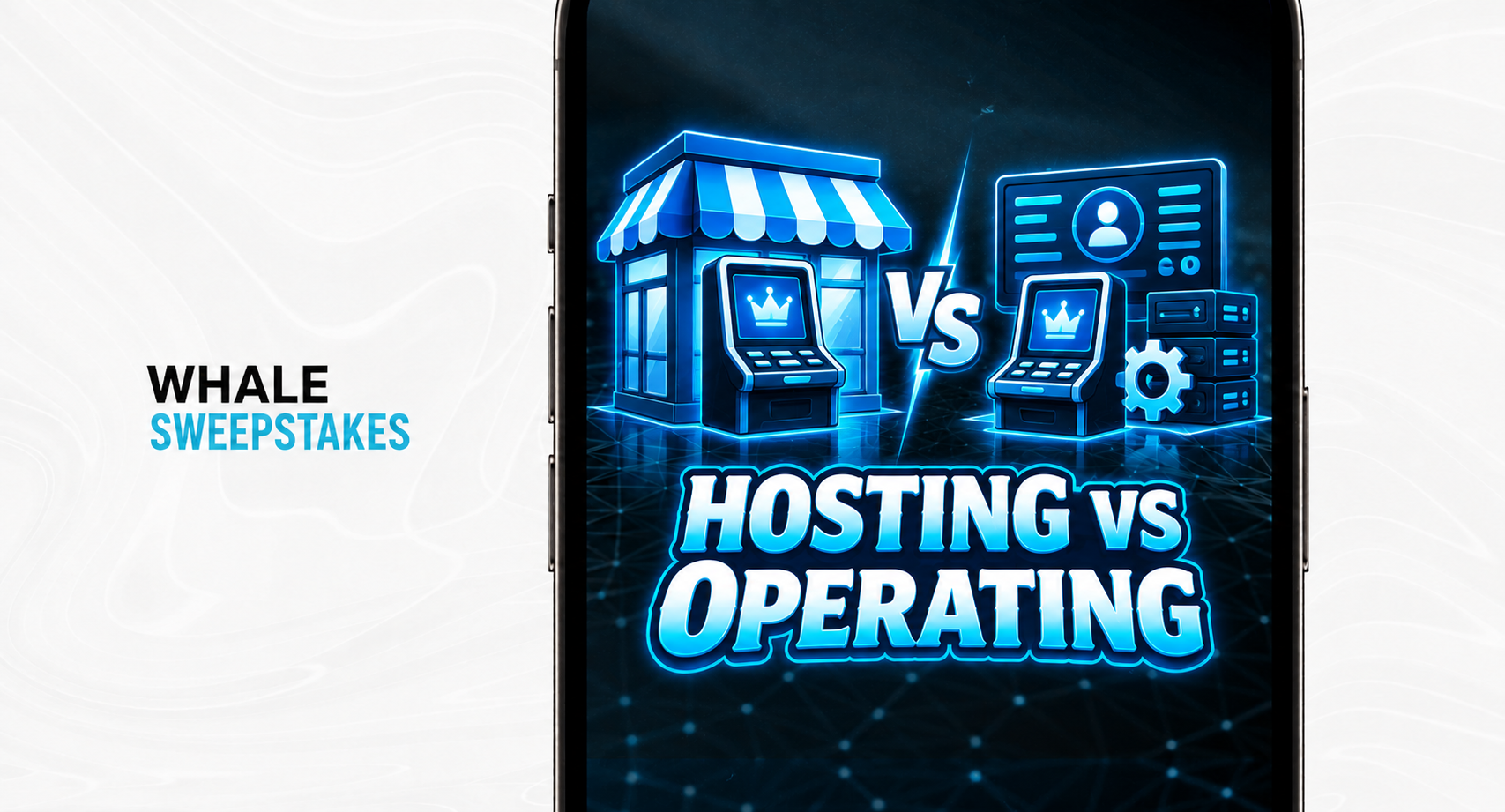
Adding Gaming to a Retail Business: Hosting vs. Operating
Adding gaming to a retail business introduces decisions about equipment, staffing, and responsibility before it introduces a new daily workflow. A store owner may host equipment supplied by another operator or purchase equipment and manage the operation directly. Those arrangements allocate control and costs differently.
Neither model should be evaluated using a promised monthly return. Start by identifying the space available, the work the store can absorb, and the contractual responsibilities the owner is prepared to accept.
Define What the Store Is Offering
Describe the proposed area, operating hours, customer flow, and staff availability. Identify whether gaming would be a small addition to the store or a substantial use of floor space. Consider which existing activity would be displaced and whether staff can supervise the area during busy periods.
Clarify the proposed operating model before comparing products. Obtain any necessary legal review for the actual location and arrangement. Equipment ownership, a supplier’s recommendation, or a revenue-sharing contract does not substitute for that review.
Write down the owner’s priorities: limited daily involvement, control over equipment, a particular platform, or a defined service arrangement. Priorities help compare proposals without assuming one model fits every store.
Understand a Hosting Arrangement
In a hosting model, another operator may supply equipment and take responsibility for parts of the operation under an agreement with the venue. Compensation may be structured as revenue share, rent, or another negotiated arrangement. The contract must state which responsibilities remain with the store.
Ask who pays for electricity, connectivity, cleaning, damage, consumables, and service visits. Identify who handles customer complaints and what employees are expected to do when equipment stops working. Hosting should not be described as free or passive merely because another company owns the machines.
For revenue share, establish the calculation base, permitted deductions, reporting period, and settlement process. A percentage has little meaning without those definitions. Ask what supporting records the venue receives and how disputed figures are reviewed.
Evaluate Direct Ownership and Operation
Operating independently may give the business more control over purchasing and supplier selection, but it also requires a plan for the responsibilities that a hosting partner might otherwise handle. Budget for equipment, installation, platform charges, maintenance, staff time, and replacement needs.
Compare gaming systems for business against the operating model rather than selecting hardware first. If a kiosk is part of the proposal, review business kiosk options for the specific workflow and compatible configuration.
Assign an internal owner for purchasing, supplier communication, and incident management. Direct ownership does not automatically mean the business controls software settings, account permissions, or all technical decisions. Those rights must be established separately.
Compare the Full Agreement, Including the Exit
Place competing proposals side by side using the same categories: initial outlay, recurring charges, daily duties, service responsibility, information access, and termination. Separate contractual commitments from estimates or informal assurances.
Ask how equipment can be removed or replaced, who restores the space, and what happens to unresolved transactions or balances. Review exclusivity and access provisions before signing; they can affect later decisions even if the initial installation seems straightforward.
Finally, consider how the agreement handles operational disruptions. A staff shortage, equipment failure, or change in store layout can expose unclear responsibilities. Agreeing on the response in advance makes the proposal more concrete and easier to assess.
FAQ
What is the main difference between hosting and operating?
Hosting places some equipment or operating responsibilities with another company under an agreement. Direct operation leaves the business to organize those responsibilities itself. The actual division of costs, control, service, and customer support depends on the written terms.
What duties can remain with a hosting venue?
The venue may still be responsible for space, utilities, cleaning, staff assistance, or incident reporting. Establish those duties explicitly. Equipment owned by a partner can still create work and costs for the business where it is installed.
What should a revenue-share agreement explain?
It should define the calculation base, deductions, settlement period, supporting records, and dispute process. It should also identify equipment ownership, service duties, and termination arrangements. A headline percentage alone does not describe the economics or responsibilities of the agreement.
Contact Whale Sweepstakes to discuss the equipment and platform questions relevant to your proposed operating model.